While sales in many physical stores worldwide are on a declining trend, omnichannel services are still evolving. Consumer-commodity interactions, implemented through NFC (Near Field Communication) tags and combined with smart supply chain management, are increasingly used as key elements of consumer interaction and loyalty strategies. The interactive store features, brand authentication solutions and contactless payments of NFC smartphones are also becoming more popular and become an integral part of the consumer shopping experience.
RFID technology will bring four major new trends to the global retail market
As a world leader in embedded application security connectivity solutions, NXP continues to drive innovation in the connected automotive, end-to-end security and privacy, smart connected solutions market. At a recent RFID conference in Seattle, NXP proposed several major global trends in the RFID market:
Trend 1: Retailers are using radio frequency identification to enhance "smart" consumer shopping experiences
Today, intelligent fitting rooms equipped with smart dressing mirrors enhance the shopping experience. After reading the RFID tag of the product, the smart dressing mirror displays the product on the touch screen behind the mirror glass, and the recommended engine displays accessories that match the product, such as shoes or wallets. The Smart Fitting Room enables customers to interact with store salespersons or get feedback from their friends on the product via social media, so that they can meet the needs of a new generation of customers and see smart connections as an advance in the shopping experience. Like some high-end retailers who attribute a 30% increase in sales to an interactive locker, smart devices are really appealing to physical stores.
Trend 2: Retailers are using RFID to achieve omni-channel smart supply chain management
With the rise of the on-demand economy, multichannel processes and omnichannel retail have grown substantially to meet the demand for accurate stocking and location information. The store is using predictive analytics software to streamline processes and help retailers identify sales potential, aiming to bring new and unique "online shopping, offline delivery" businesses to the store. To support both solutions and turn big data into smart data, retailers are using radio frequency identification technology to provide accurate, real-time data to software analytics. Some retailers have confirmed that smart supply chain management helps maximize market share. For example, sports retailer Decathlon 3 reported a 2.5% increase in sales as inventory visibility improved, while inventory costs were reduced by $ 1bn due to RFID implementation, according to a recent report by Macy's.
Trend 3: Retailers are integrating radio frequency identification solutions to monitor perishable goods
For food retailers, timely delivery of the product from the warehouse to the shelf before it expires is a challenge. Such industries often do not have accurate insight into the shelf-life of perishable goods in stock. This creates unnecessary waste, with a total annual loss of 162 billion U.S. dollars, not to mention health risks and environmental impacts. According to data from an industry study 6, a $ 10 billion retailer can reduce up to $ 60 million a year in losses by effectively managing its inventory depletion and shelf life. To maximize cost savings, food retailers are conducting large-scale testing of RFID solutions, including tracking and sensing technology for temperature and humidity monitoring. With this solution, distributors, logistics companies and wholesalers can locate their orders online in real time. Combined with the e-shelf label, retailers will be able to deal with expiring products in time through price-reduction sales and may even allow consumers to see general promotions directly.
Trend 4: Increasing consumer and contactless payments with NFC smartphones will become more popular
NXP's RFID portfolio supports the entire retail ecosystem, including smart card readers that read NFC tags and establish IoT connections, as well as secure point-of-sale (POS) smartphones or payment cards Contact payment card reader chip. Contactless payments are increasingly being seen by customers and retail partners as an integral part of a seamless shopping experience.
The electromagnetic overhead crane can be furnished with load handling devices such as motor grab, Electromagnetic Chuck to meet the the requirements of hoisting varied types of material.
The double girder overhead crane of classification group of A3~A7, has a commonly used lifting load of 3-250t, so that it is suitable to work in factories, warehouses and freight yard where the ambient temperature is -10 degree ~40 degree and the relative humidity is not more than 85%.
This kinds of Overhead Crane are also widely used for casting and steeling and ironing factory.
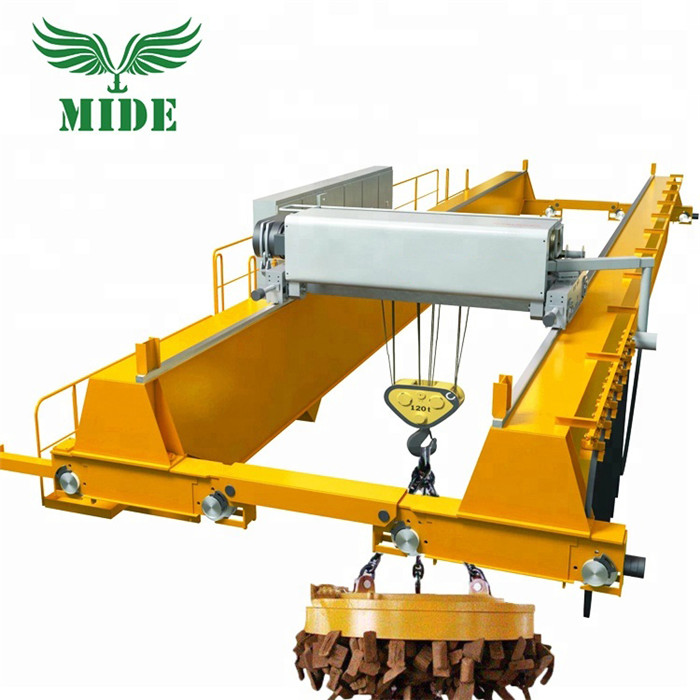
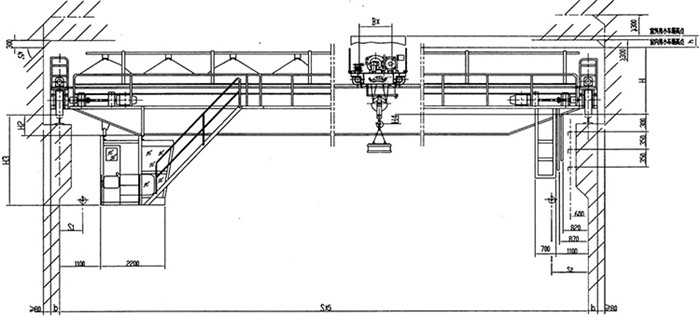
Parameter for the Electromagnet Overhead Crane
| Loading capacity | 5 ~ 32t |
| Lifting height | Customized |
| Lifting speed | Single speed: 1 ~ 12.5 m/min; or customized Variable frequency speed: 0.1 ~ 12.5 m/min; or customized |
| Span | 10.5~31.5 m |
| Lifting mechanism | Winch trolley or Electric Hoist |
| Working class | A5-A7 |
| Working temperature | -20 ~ 40 ℃ |
| Power supply | AC-3Phase-220//230380/400/415/440V-50/60Hz |
| Control voltage | DC-36 / 48V |
| Motor protection class | IP54 IP55 IP65 |
| Control way | Cabin, wireless remote, pendant push button. |
| Safety device | Buffer,current overload protection,overload device,power failure protection |
| Application area | Steel factory,workshop,warehouse,logstic,etc. |
| Painting color | Yellow,Red or Customize |
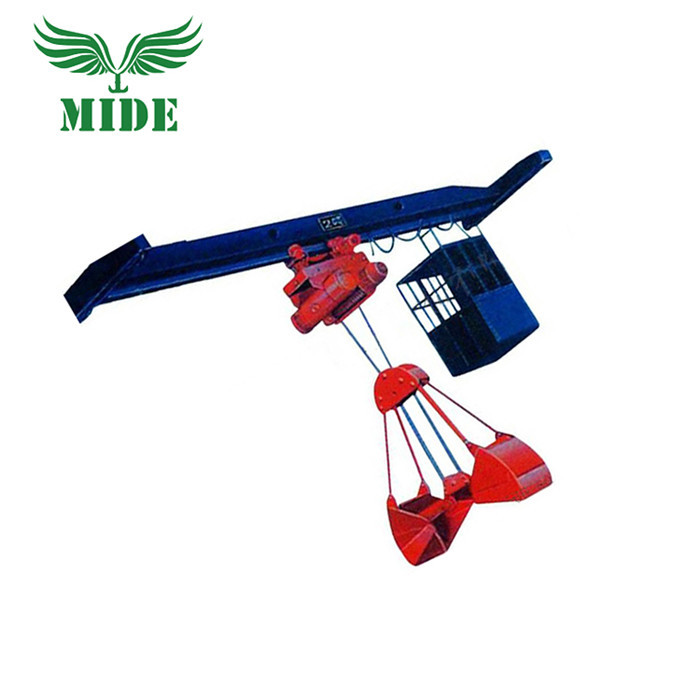
More for choice
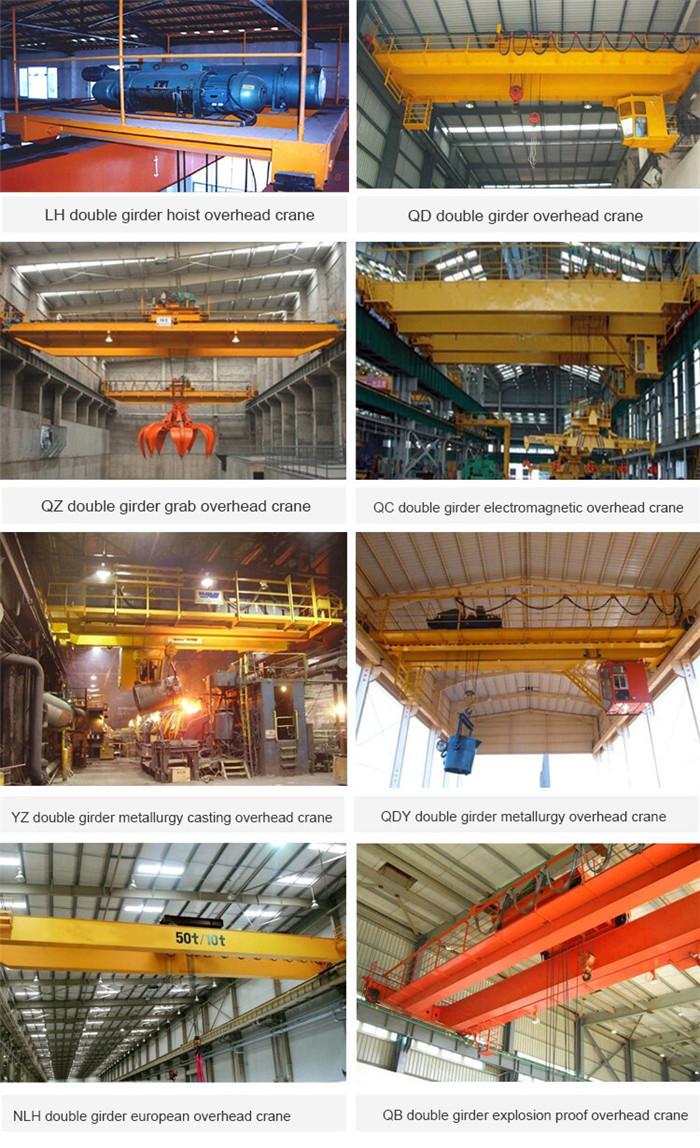
Overhead Crane With Electromagnet
Electromagnetic Overhead Crane,Overhead Crane,Crane With Electromagnetic Chuck,Electromagnetic Chuck
Jiangxi Mide Industrial Co., Ltd. , https://www.midecrane.com

没有评论:
发表评论